
tea / menu / ritual
The tea omakase, explained.
3 min read
Words by Sara Tehrani
Five cups. Fifteen quiet minutes. Why this is on the menu.
The tea omakase is the only thing on our menu that you cannot adapt, modify, or rush.
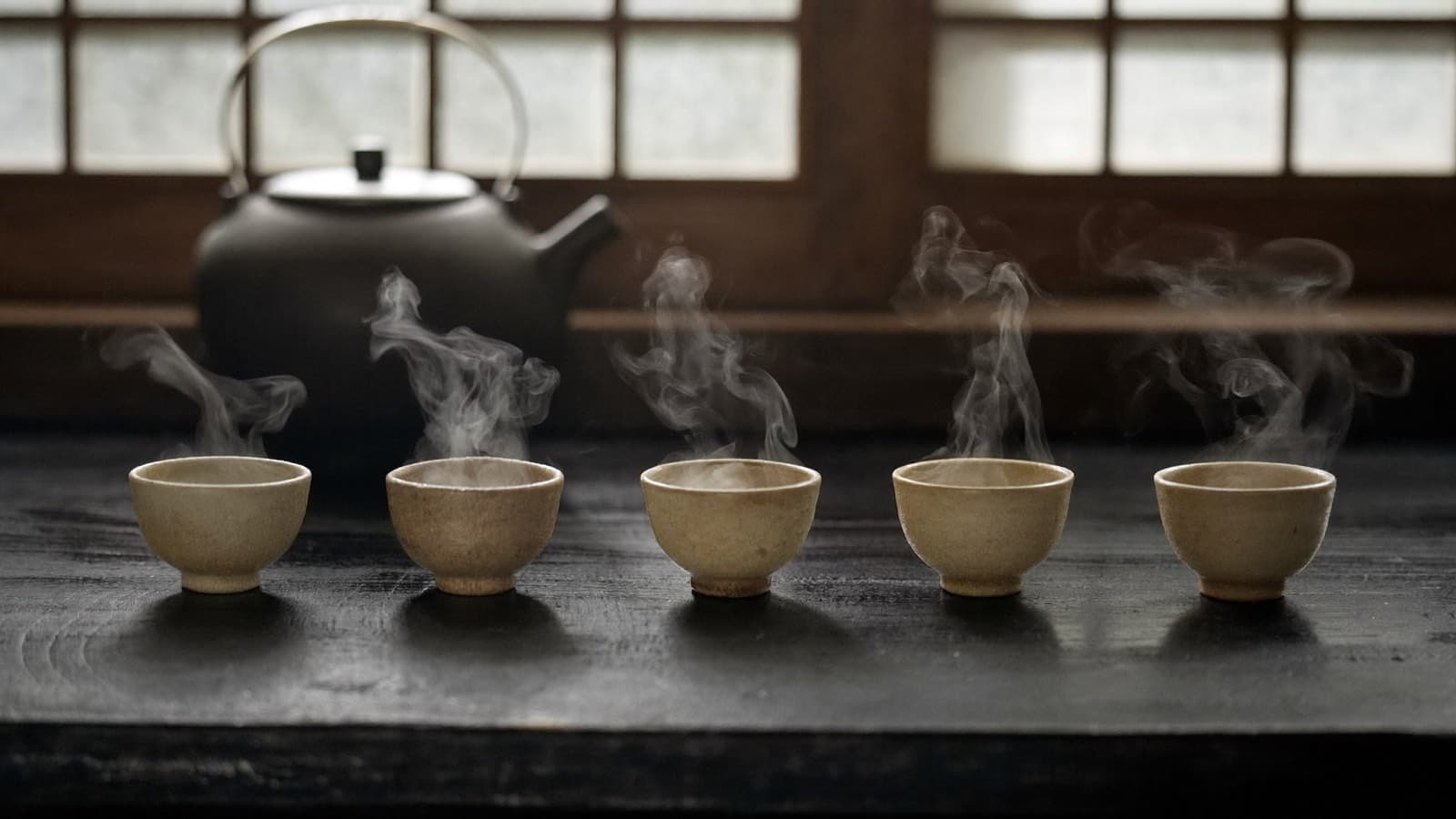
Five cups, in order. Fifteen minutes from the first to the last. The order is the same every night. The leaves change with the season. The cups are different — five distinct ceramic shapes, each chosen for the temperature and aroma profile of its tea.
You sit at the bar (only the bar — never a table). The tea is brewed in front of you. The pause between cups is the same length every time. There is no "what do you think?" in between cups. There is no menu reading. There is no upsell. If you want to drink one of the teas faster, you can; the next cup waits until you're ready. If you don't finish a cup, that's fine; we clear it when we clear it.
The teas, currently:
- Gyokuro from Daintree — shaded green tea, brewed at 55°C in a small kyusu, poured into a thimble-shaped cup. Three minutes of steeping. Tastes like the smell of a kelp forest at low tide.
- First-flush sencha from northern New South Wales — a fresh young tea, brewed at 70°C in a slightly larger pot, served in an open shallow cup that exposes more aromatic surface. Eighty seconds.
- Hojicha — roasted, dark, smelling like a wood-fired stovetop. Brewed at 90°C. Served in a heavy ceramic cup with a slight inward curl to hold the aroma.
- A genmaicha with brown rice from a Riverina rice grower we work with for our table rice. The most playful cup, the one that breaks the rhythm. Eighty seconds at 85°C.
- A bancha, the autumn-harvest tea, served last because it goes coolest and slowest. Brewed cooler, drunk slower. The cup is the smallest of all five — you've already had four; we don't need to feed you a sixth.
Why is this on a restaurant menu? Because dinner, at its best, has a moment of pause near the end. The tea omakase is that pause. It is the only fifteen minutes of your evening with us that doesn't ask anything of you. You don't taste a sauce, you don't admire a plate, you don't tell us what you think. You drink. You stop.
We can do that.
It is one of the few things I'm sure we will never take off the menu.
— Sara